
“Kill Your Darlings…”
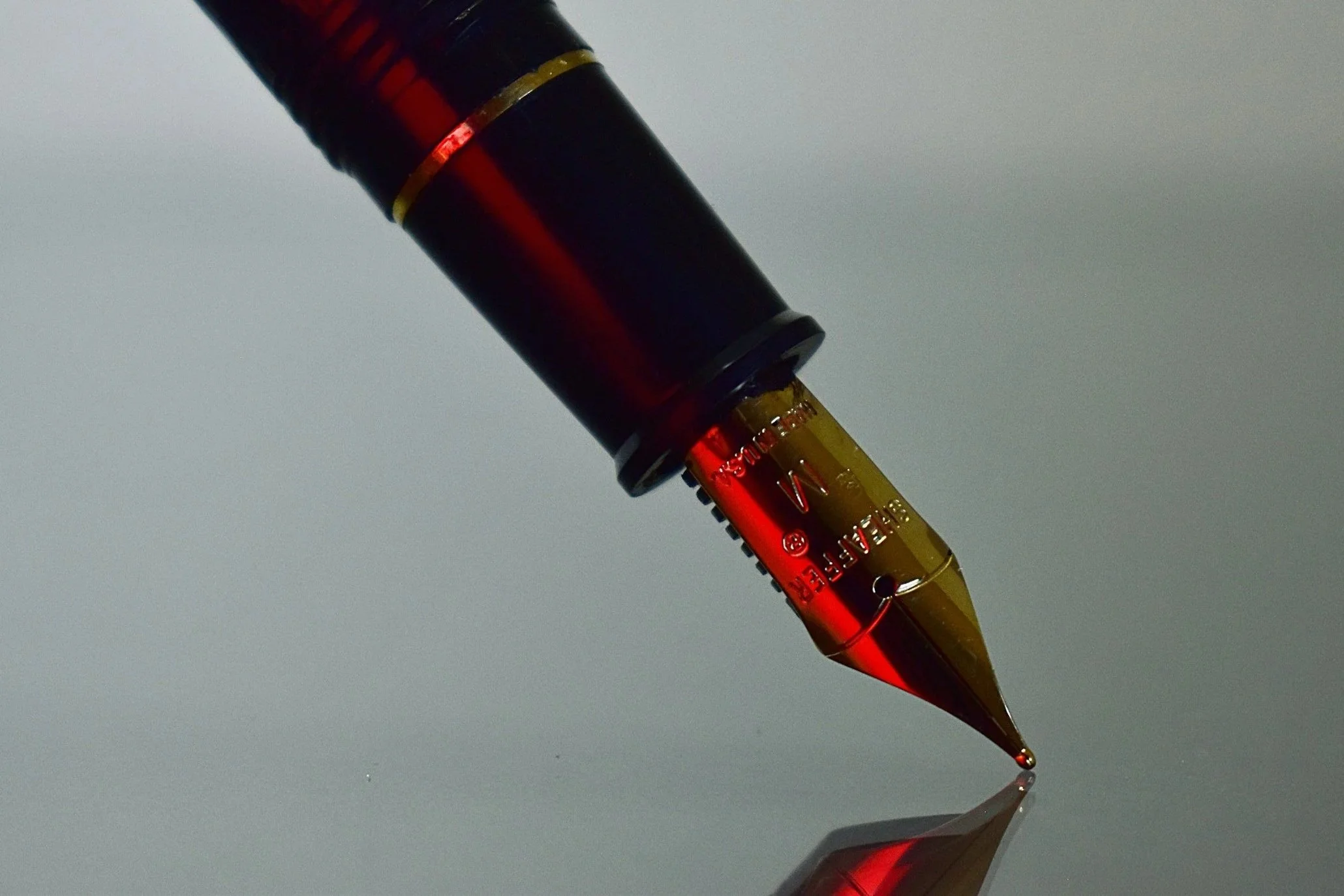
“Kill your darlings, kill your darlings, even when it breaks your egocentric little scribbler’s heart, kill your darlings.”
This advice, adopted by and issued from Stephen King in his book On Writing, often refers to the excessive use of adverbs or other such literary devices that we writer’s tend to employ, deeming ourselves such brilliant creatives as we inadvertently carry out a slow, painful death to our masterpieces. Enter, editors.
I’m an editor, but I’m also an author. So I know that inflated feeling of writing magnificence—often followed by that soupy feeling in the pit of my stomach as I enter the editing process. It’s excitement mixed with fear and a small dose of insecurity.
Yep. I’ve opened my own edited manuscript expecting to find some notes from the editor and a healthy handful of grammatical corrections, when instead, I discover entire sentences that have been reworked, descriptions rewritten, and passages restructured that I took pride in when I wrote and revised them.
Naturally, all writers find themselves wondering from time to time: “Why did my editor change that?”
Four Habits Editors Often Strike (with a Blunt Object)
An editor worth their salt does so much more than correct mistakes. Armed with red ink or a delete key, they set out to strike through the writer’s ‘little darlings’ and bring their stories back to life. Editors don't simply look at a manuscript and ask, "Is this technically correct?" They ask questions such as:
Is this sentence as clear as it could be?
Will readers stay immersed in this story?
Does the content create strong mental images?
Is anything slowing the pace or creating confusion?
Many of the revisions editors make involve writing habits that aren't always wrong, but weaken the content when they appear too frequently. Among the most common in my experience as an editor are passive writing, flipping verb tense, shifting points of view, and overusing "be" verbs.
Do you commit any of these literary crimes? Let’s take a look at each offense and see where you stand.
1—Passive Writing Is Death by a Thousand Cuts
Among the most common feedback I give my authors involves passive writing. Consider the following example, then I’ll tell you why it is so painful for the reader.
Passive:
The woman was counting her lost dreams as she continued tossing pebbles into the stream.
Active:
The woman counted her lost dreams with each pebble she tossed into the stream.
Neither sentence is incorrect. In fact, both communicate exactly the same information. So why would an editor change it? Because the second sentence creates a stronger cadence; it moves the action forward. Even in the past tense, it feels more direct and energetic, while the original passive version feels stagnant, stale, and awkward.
One passive sentence isn't usually a problem. A manuscript filled with passive construction, however, drags on and on, ultimately killing reader engagement, one ‘-ing’ word at a time. Death by a thousand cuts.
What an Editor Sees
When editors encounter repeated passive voice, it looks like overuse of words and phrases like:
as, that
seems to, appears to
starts to, begins to
continues, seems
could be, might be
usually, probably
sentences that begin with there
words that end in -ing
If you can read your sentence without one of these words/phrases and it still makes sense, kill it. Leaving a passive voice in place creates:
Pacing problems
Less dynamic action
Reduced tension
Weaker characters
Disconnection between readers and the story
Readers connect with characters who actively do things, not those who stand idly by while things happen around them. That's why editors frequently revise passive sentences—not because they're technically wrong, but because stronger alternatives create anticipation, compelling characters, and an engaging pace. Readers begin to picture themselves in the story.
2—Flipping Verb Tense Annihilates the Action
Consider the example below:
Jessica opened the door and walks into the kitchen.
At first glance, the sentence may seem harmless. Readers can certainly understand what Jessica is doing. But editors immediately notice that the sentence begins in the past tense and shifts to the present tense.
The issue isn't confusion. We know what she did. The issue is interruption. Something doesn’t sound right. When readers are immersed in a story, they aren't thinking about grammar. They're imagining scenes, following characters, and becoming emotionally invested in what happens next. An unexpected tense shift pulls attention away from the story and toward the writing itself. If a reader begins thinking about your grammar, they are no longer thinking about your story.
What an Editor Sees
Repeated tense shifts can:
Disrupt narrative flow
Create a clunky reading experience
Pull readers out of the action
Cause immediate distraction
Many writers don't even realize they're doing it. It often happens during exciting or emotional moments when the story feels so vivid that even the writer is caught up in the action.
Editors catch these inconsistencies because they're reading from the perspective of someone encountering the story for the first time. Their goal is simple: keep readers immersed.
3—A Shifting POV Kills Connection
Point-of-view corrections can be a significant time-suck for an editor. Suppose a manuscript is written in first person for two to three chapters, then there is a shift to third person, and back again all in the same chapter, ,or even the same page. It is a fatal flaw that kills the connection between the story-teller and the reader, one the editor must attack with tedious revision.
Consider this passage:
I smiled as I entered the room. I hoped everyone would like my presentation . . . and maybe secretly, I hoped they would like me, Amanda Walker. I stepped up to the podium, wiped my sweaty palms down the sides of my skirt, and opened my notes to begin.
Sitting in the second row, Brian noticed that Amanda looked nervous. As she took the stage and prepared to speak, he watched her blush from the neck up as she pressed her hands against her hips. He said a silent prayer that she would tap into her confidence and knock her presentation out of the park.
The first paragraph is written in first person from Amanda’s point of view. Then suddenly, the narrative flips to third person, and we are reading from Brian’s perspective of Amanda.
Essentially, readers can follow the action here, but there’s an immediate disconnection the moment the POV shifts. Even if the reader doesn’t recognize the technical error, they may still find themselves reading and rereading the passage to make sure they understand what is going on here.
When the POV shifts over and over again, the editor will flag it so the author can pick one and stick with it. An occasional shift in POV is relatively easy to correct, but manuscripts that are riddled with unexpected leaps between first person and third person, or one character’s perspective to another, are a bear to wrestle with.
What an Editor Sees
Frequent point-of-view shifts can:
Reduce emotional immersion
Create confusion about perspective
Make scenes feel less focused
Disrupt narrative flow
Left uncorrected, that sort of flipping back and forth creates confusion that ultimately disconnects the reader from the story. Don’t allow flipping POVs to suffocate the life out of your story.
4—Overusing "Be" Verbs Flat-Lines the Energy
Excessive use of “be” verbs is one of the most common errors I encounter as an editor. Dulling the energy one verb at a time, it sucks the life out of the writing.
Am, are, is, was, were. Writers use them every day. Editors use them every day. They're an essential part of the English language. The issue arises when they become the primary engine driving the prose. Only they are not an engine, and they do not drive anything. Rather, they decelerate an otherwise animated heartbeat into a few . . . blips . . . and an . . . ultimate . . . flat . . . line . . .
Consider these examples:
The dog was in the backyard.
Compared with:
The dog raced across the backyard in pursuit of a squirrel.
—OR—
She was angry.
Compared with:
She slammed the cabinet door and muttered under her breath.
The revised versions in each scenario create movement and imagery. Readers experience the scene instead of simply receiving information about it. The original sentences are dull and lifeless. An entire manuscript written like this is a slow, painful death march.
What an Editor Sees
When a manuscript relies heavily on "be" verbs, editors often notice:
Static descriptions
Less vivid imagery
More telling than showing
Slowed momentum
Dulled action
Fewer opportunities for emotional engagement
Strong verbs help readers visualize scenes. They create movement and energy. Overusing “be” verbs has the opposite effect. Therefore, editors frequently replace "be" verbs with more descriptive alternatives to improve the reading experience.
Editing Is So Much More Than Correcting Mistakes
If there's one thing writers should understand about these four common mistakes, it's this: Editors aren’t necessarily changing these elements because they violate a rule. They're changing them because they affect the pace and engagement of your storytelling.
A series of passive sentences are the work of a blade. Constant shifts in verb tense obliterate an otherwise engaging story. An author who can’t pick a point-of-view murders their story-telling. And excessive "be" verbs flat-line any scene. Individually, these issues may seem insignificant. Together, they create enough friction to pull readers out of a story.
Professional editors are trained to notice friction. Our job isn't simply to correct grammar, but to help readers move effortlessly through a book, becoming so engaged in the story that they forget they're reading at all.
So the next time you open an edited manuscript and wonder why your editor changed a word or phrase that may not have been technically wrong, remember this:
Correcting grammar and mechanics is only skin deep. Keeping a reader emotionally engaged in your story is a matter of life and death for your published book.
Free Publishing Guide from Andria Flores
If we haven’t met yet, I am Andria Flores: author, editor, and recovering perfectionist. For more articles like this one, connection to a supportive author network, and trusted publishing resources, subscribe to my newsletter today. When you do, I’ll send you my free Publishing Guide as a gift (and I won’t blow up your inbox every week.) My 40+ page eBook is a step-by-step guide through the publishing process, including proven tips, tricks, and links you can use along the way. Get yours here!
Let’s connect! Message me here.